Progressive Masculinity Workshop
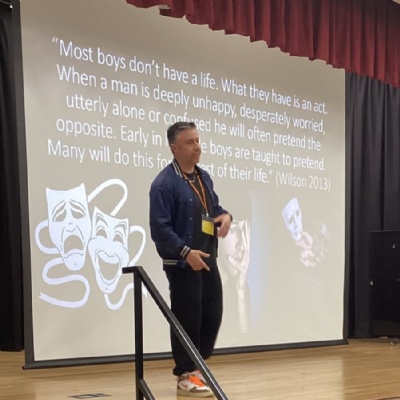
There are many negative connotations of masculinity that are rife in the press and on social media. Here at Heston, we want to challenge those ideas by empowering our young men to always be respectful to their female peers. The School brought in a well-recognised charitable group that addressed these misconceptions about being a man with young people. Progressive Masculinity explored what it can mean to be ‘a man’ in today’s world and the incredible potential of being a man. With 4 billion men in the world, we believe there can be 4 billion different ways to 'be a man'.
The charity excels at creating safe, non-judgmental spaces where boys and men can explore their masculinity and its potential.
Their workshops and training empower boys and men to construct models of masculinity consistent with their values.
Ms I Hall [Deputy Headteacher]
The Progressive Masculinity Workshop for males and females was created to challenge outdated stereotypes about gender and encourage healthier, more inclusive ideas of what it means to be masculine.
It was necessary because many young people still feel pressurised to fit into narrow roles—boys to be tough and unemotional, and girls to conform to limiting expectations about behaviour and identity.
The assembly provided a safe space to explore emotions, respect, empathy, and equality, helping participants understand that strength can include kindness and vulnerability. Overall, it was a positive experience as it promoted mutual understanding, reduced harmful stereotypes, and empowered young people to express themselves more freely and confidently.
Ms S Jassal [Acting AHT]
The workshop was an enlightening experience that was provided for the Year 10 students. It opened doors for males to be sensitive and to promote positive masculinity to everyone across the year group. For the female students, it was an eye-opening chance to see the pressures that men face and how it is to be vulnerable in modern society. I hope to have more opportunities like this in the future.
Amelia Salkanovic [10W]
The Masculinity Workshop was an incredible experience. I believe it opened the eyes of many students. It helped us realise the two meanings of masculinity and showed that it is okay for men to have moments of vulnerability. It also highlighted the difference between toxic masculinity and true masculinity, which helped me, for the first time, to understand the distinction clearly.
Rimneet Kaur [10Y]
It was very impactful, as the speaker allowed the boys to see what it meant to be masculine in a different way. He put typical masculine stereotypes on trial and criticised them. It was an enlightening experience, as it reinforced the idea that being a man does not have to mean being big, strong, and emotionless. It is perfectly fine to be vulnerable, which is often seen as a feminine quality. The meaning of being a man is changing, and the assembly allowed us to understand how and why.
Fiazan Faissal [10W]
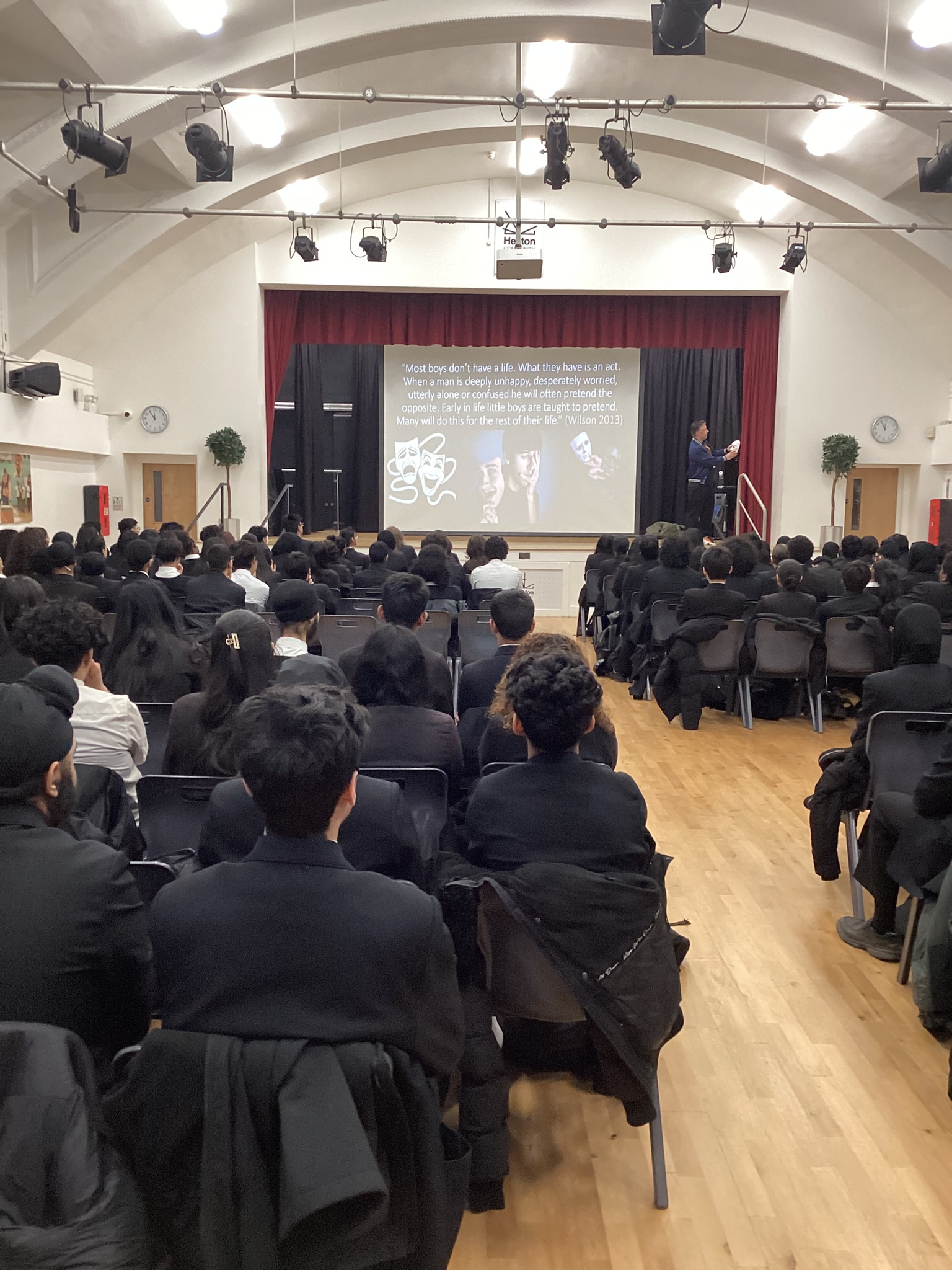
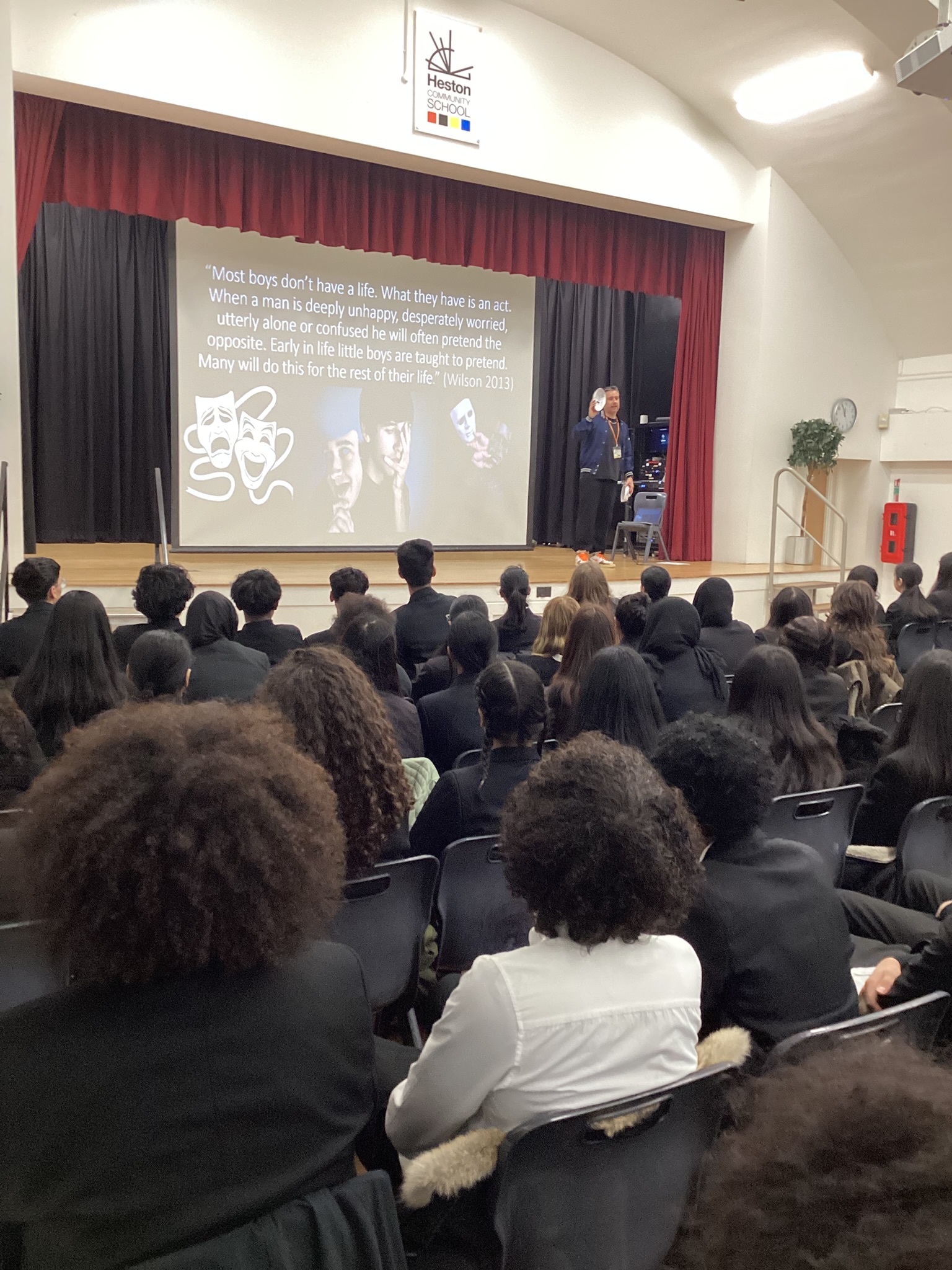
The workshop about Toxic Masculinity was very interesting and inspiring. We were intrigued by how, and for the first time, we were told we were allowed to express emotions. We felt heard and really listened to. I liked that we got to interact with the presenter and ask him questions about masculinity, something very stereotyped, and find the truth about how it really is during the assembly.
During the assembly, we watched a short video on how men could be and should be. In the video, a woman was getting very uncomfortable with a group of men who approached her and one of the men had stood up for her. This showed us that not all men are the same and not all are dangerous.
After, the presenter showed us some masks, made by some year 12 boys, that had words on the outside of how they thought they were meant to feel but on the inside they wrote about everything bothering them and how they really feel – emotions they were scared to show others. We thought this was an ideal way to convey how you feel because we can let go and no one will know who wrote it. It suggested that they were allowed to feel even if they weren't comfortable with it.
Overall, we thought the workshop was a major part of what children in Year 8 should be shown, as in this stage of life they project whatever they see, and this hopefully has a positive effect on their behaviour as they grow up and behave later in life.
Ilyas Ghafuri and Saanvi Gogar [8R]
We were fortunate to welcome an external speaker to our school. He spoke about the flaws of toxic masculinity and imparted wisdom through several examples that the idea of toxic masculinity is harmful. What truly resonated with me was the fact that the presenter stated that the idea of masculinity was not a fixed set of values, but rather built on the values one believes. This has greater links with other aspects of toxic masculinity and the state many men in modern society have arrived at. This included exploring the pressures placed on men with several positive ways to respond to these pressures. For example, a positive response is to maintain a healthy pressure from within to improve and follow one's own goals rather than conform to society and the overbearing external pressures brought about by it.
Alpi Uddin Bhuyan [11W]
The Year 11 assembly addressing progressive masculinity was very engaging and interesting. It explored the concept that being masculine is not just about conforming to pre-existing stereotypes, but also expressing emotions. We learnt that following expectations of what masculinity looks like means that you restrict your own personality and development. It was a valuable experience which allowed many of us to reflect on our own identities.
Essa Hussain [11B]